
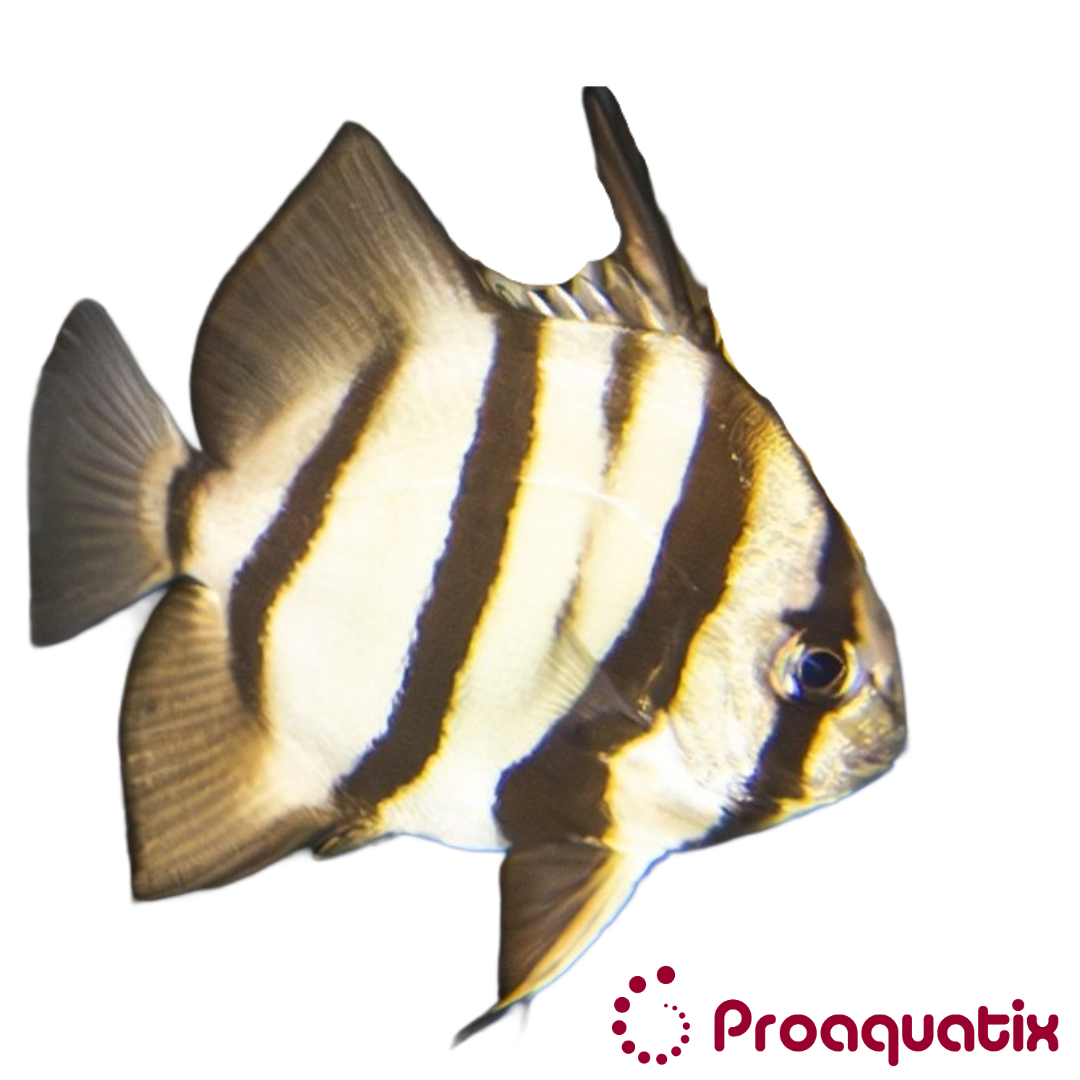
Atlantic Spadefish (Chaetodipterus faber)
Description: Atlantic spadefish are laterally compressed, disk-shaped fish with blunt snouts and small mouths, somewhat resembling large angelfish. The fish are silver in color, with adults possessing four to six prominent vertical black bands that may fade to a uniform gray with age. Adults of this species also bear exaggerated, wing-like dorsal and anal fins that are typically dark gray or black in color. Occasionally, the silver body may take on a leaden or brownish hue depending on the environment. Atlantic spadefish are active swimmers that often congregate in mid-water, utilizing their deep bodies to maneuver effectively within the water column.
Natural Ecology: Atlantic spadefish is primarily an omnivore of sponges, jellyfish, anemones, and small crustaceans. Naturally forms schools.
Indigenous To: The natural migratory range of the Atlantic spadefish spans from Massachusetts to Brazil, as they head for deeper or more southern waters in the winter.
Behavior: This species is not aggressive but is a predator of various sessile invertebrates and small crustaceans.
Compatibility: Often nips at corals and anemones and will eat many types of invertebrates. Also grows large, whose output of dissolved wastes may be problematic to the maintenance of pristine water quality.
Food: Proaquatix specimens have been weaned to take aquarium pellets and flakes. Freshly frozen invertebrates such as ocean plankton, Mysis shrimp, brine shrimp, and chopped squid will be readily accepted.